
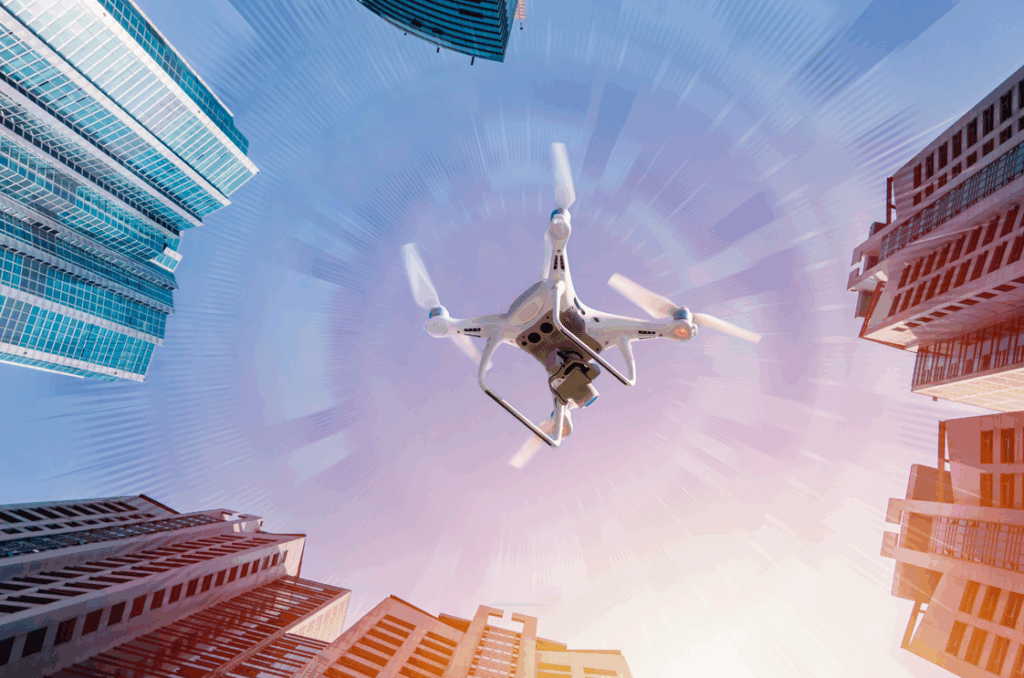
The integration of artificial intelligence (AI) into real-time video processing for drones is rapidly transforming both commercial and military sectors. By enabling drones to autonomously analyze their environment, identify changes, and make split-second decisions, AI is redefining how drones operate and what they are capable of achieving across various industries.
At the core of this advancement is AI’s ability to process live video feeds and detect objects, people, animals, or environmental anomalies without relying on constant human input. This real-time processing allows drones to adapt their behavior dynamically—navigating around obstacles, identifying potential threats, or optimizing their f light paths based on environmental conditions. As a result, drones are becoming increasingly self-sufficient, with human operators stepping into more supervisory or strategic roles rather than being involved in every moment-to-moment decision
In commercial applications, this translates into significant benefits. In agriculture, for example, drones equipped with AI can monitor crop health, detect invasive weeds, and even target specific areas for pesticide application. This precision reduces chemical usage, lowers costs, increases yields, and minimizes environmental impact. Farmers can now use drones not just for observation but for highly targeted interventions that were previously labor-intensive or impossible to perform at scale
Search-and-rescue operations are also seeing a dramatic shift thanks to AI-enabled drones. These drones can quickly scan vast and inaccessible areas, identify heat signatures or human forms, and notify rescuers in real time—drastically reducing the time it takes to locate missing persons. In natural disasters or conflict zones, this capability can be life-saving, allowing emergency teams to respond faster and more effectively
In the military and defense realm, AI-powered drones are enhancing surveillance, reconnaissance, and even combat operations. By processing live feeds and making tactical decisions in the field, drones can identify hostile targets, predict enemy movements, and coordinate with other units in real time. This reduces the cognitive load on human personnel and improves mission outcomes through greater speed and accuracy.
Beyond these applications, AI is revolutionizing how drones are used for infrastructure inspection, environmental monitoring, logistics, and security. AI-driven route optimization enables drones to conserve energy and complete tasks more efficiently, while anomaly detection can identify early signs of structural damage, pollution, or illegal activity—alerting authorities before issues escalate.
One of the most promising aspects of this technology is the move toward full autonomy. As AI algorithms become more sophisticated, drones are progressing from semi-autonomous tools to systems capable of operating independently for extended periods. This shift holds enormous potential for industries where manpower is limited or conditions are hazardous.
The economic impact is equally notable. With AI reducing the need for manual labor, operational costs drop, and productivity rises. Companies are investing heavily in AI-drone integration, recognizing the long-term value in terms of safety, efficiency, and innovation. Governments and research institutions are also playing a key role, funding studies and pilot programs that explore the boundaries of what AI and drones can accomplish together.
As the technology matures, ethical considerations and regulatory frameworks will become increasingly important. Ensuring transparency in AI decision-making, protecting privacy, and maintaining safety standards will be essential to fully unlocking the benefits of this powerful technology.
In conclusion, AI processing for drones’ real-time video capabilities represents a transformative leap forward for multiple industries. Whether scanning farmland for weeds, searching remote terrain for survivors, inspecting power lines, or providing strategic military intelligence, AI is enhancing the speed, precision, and autonomy of drones in ways that were previously unimaginable. With continued investment and innovation, the future promises a new era where drones not only see the world around them—but also understand and act on it in real time.
Written by: Matan Koren